

You want to work in healthcare but aren’t sure which path to choose. Both Health Promotion Officers (HPOs) and nurses help people, but their jobs, studies, and salaries are different.
In this guide, I’ll help you understand health promotion officer vs. nursing: the main differences so you can pick the right career for your future.
Key Takeways:
- An HPO is accredited by QTCO, while nursing is accredited by SANC.
- You need grade 11 or 12 to study the health promotion officer course.
- A nursing career requires a grade 12 certificate with Maths/Maths Lit, English and Life Sciences.
- A nursing diploma takes 3 years, while an HPO takes 12 months.
What Is A Health Promotion Officer?
A Health Promotion Officer (HPO) is a healthcare worker focusing on prevention. They teach people how to stay healthy so they don’t get sick in the first place. HPOs may also treat minor illnesses.
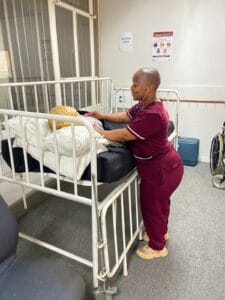
Also, they work within communities, visiting homes and schools to promote clean water, healthy lifestyles, and vaccines.
What Is A Nurse?
A nurse is a trained professional specialising in clinical care and treatment. While nurses also teach health, their primary job is to care for sick or injured people.
Their medical tasks involve giving medicine, checking wounds, and assisting doctors in hospitals.
You can find different levels of nurses, including Auxiliary Nurses, Staff (General) Nurses, and Professional Nurses, in South Africa.
Watch this brief video to learn more about these nursing categories.
HPO vs. Nursing Course Requirements
- Health Promotion Officer: You need a Grade 11/12 (Matric) certificate to study the HPO course. Even adults without grade 11/12 can enrol in the course, but you must take a short course with Interact Health. A health promotion officer course is easy to start if you want to begin your healthcare journey quickly.
- Nursing: The course requirements are stricter. According to the South African Nursing Council (SANC), you must have a National Senior Certificate with specific subjects like English, Mathematics (or Math Literacy), and Life Sciences.
HPO vs. Nursing Accreditation
- HPO Accreditation: An HPO is an occupational qualification. It’s accredited by the QCTO (Quality Council for Trades and Occupations) and the HWSETA.
- Nursing Accreditation: The SANC (South African Nursing Council) and the CHE (Council on Higher Education) accredit all nursing programmes. This means you can’t be a nurse unless you’re registered with SANC.
Health Promotion Officer vs Nursing Course Duration
- HPO: It’s a 1-year course (NQF Level 3) and a fast way to get into the working world.
- Nursing:
- Auxiliary Nurse: 1 year (Higher Certificate).
- General/Staff Nurse: 3 years (Diploma).
- Professional Nurse: 4 years (Degree).
Health Promotion Officer & Nursing Jobs (Where They Work)
- HPOs work in local clinics, NGOs, government health departments, and community centres. They spend a lot of time “on the ground” in neighbourhoods.
- Nurses work in public and private hospitals, specialised clinics (like ICU or Maternity), and private doctors’ rooms. They spend most of their time in a medical facility.
Health Promotion Officer Salary vs. Nursing Salary
- HPO Salary: An entry-level salary is between R6,500 and R15,000 per month. The salary can increase with experience and advanced education.
- Nursing Salary: This varies greatly by level. An Auxiliary Nurse might earn a similar starting salary to an HPO. But a Professional Nurse (who studied for 4 years) can earn significantly more. They may start at R30,000+ and go much higher with specialities and experience.
Can An HPO Be A Nurse?
No, a Health Promotion Officer is not a nurse. They’re two separate professional groups. An HPO is accredited by QTCO, while a nurse is accredited by SANC.
HPO Nursing Colleges vs. Nursing Training Colleges
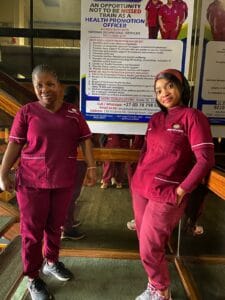
- HPO Colleges: Private colleges like Interact Health focus specifically on occupational health courses, like the HPO programme. They’re often located in central areas like Germiston to be close to the community.
- Nursing Training Colleges: These include large universities (like Wits or UP) and private hospital groups such as Life Healthcare or Netcare. They have specialised nursing education centres.
Health Promotion Officer vs. Nursing In South Africa
| Feature | Health Promotion Officer (HPO) | Nurse (Auxiliary to Professional) |
| Main Focus | Prevention: Teaching people how to stay healthy. | Clinical Care: Treating and caring for sick patients. |
| Primary Goal | Stop diseases before they start in the community. | Manage illness and assist doctors in hospitals. |
| Course Duration | 1 Year | 1 to 4 Years (depending on the level) |
| Min. Requirements | Grade 12 (Matric) | Grade 12 with English, Maths/Maths Lit, and Life Sciences |
| Accreditation | QCTO and HWSETA | SANC and Council on Higher Education |
| Starting Salary | ~R6,500 per month | ~R30,000+ per month |
| Where They Work | Communities, Schools, Clinics, and NGOs. | Public and Private Hospitals and Clinics. |
| Training Colleges | Private colleges like Interact Health. | Universities and Hospital schools (e.g., Netcare/Life Healthcare). |
Conclusion
Become a Health Promotion Officer if you love teaching people and want to stop diseases before they start. It’s a fantastic choice, and you can start quickly.
If you prefer working in hospitals and performing medical procedures, then nursing is the path for you. Both careers are vital to making South Africa a healthier place!


